
Employers Track Their Workers. Here's What It Costs.
74% of employers track workers, and 22% of employees know. The real cost isn't the tracking — it's what it does to trust, retention, and the numbers you're actually trying to protect.
Insights on capacity management, hiring decisions, and building balanced teams
74% of employers track workers, and 22% of employees know. The real cost isn't the tracking — it's what it does to trust, retention, and the numbers you're actually trying to protect.
What capacity-aware 1:1s are, why capacity-blind ones fail, and the three-step method: shared picture, question-shaped prep, growth timeline.
Monday.com promises scalable growth through capacity management. But you can't scale what you haven't defined. Here's the foundation their strategies skip.
ClickUp presents four capacity strategies—lag, lead, dynamic, match. But they're all responses to problems. Here's the strategy that prevents them.
Enterprise capacity frameworks were built for manufacturing and IT infrastructure. Here's why they fail knowledge workers—and what to do instead.
Capacity planning tools promise clarity through math. But the formula that works for manufacturing breaks down the moment you apply it to creative work.
Every capacity management guide tells you to forecast, track how loaded your team is, and monitor KPIs. But they all skip the same foundational step that makes everything else actually work.
The gap between what managers think work takes and what it actually takes causes most team dysfunction. Here's why it happens and how to fix it together.
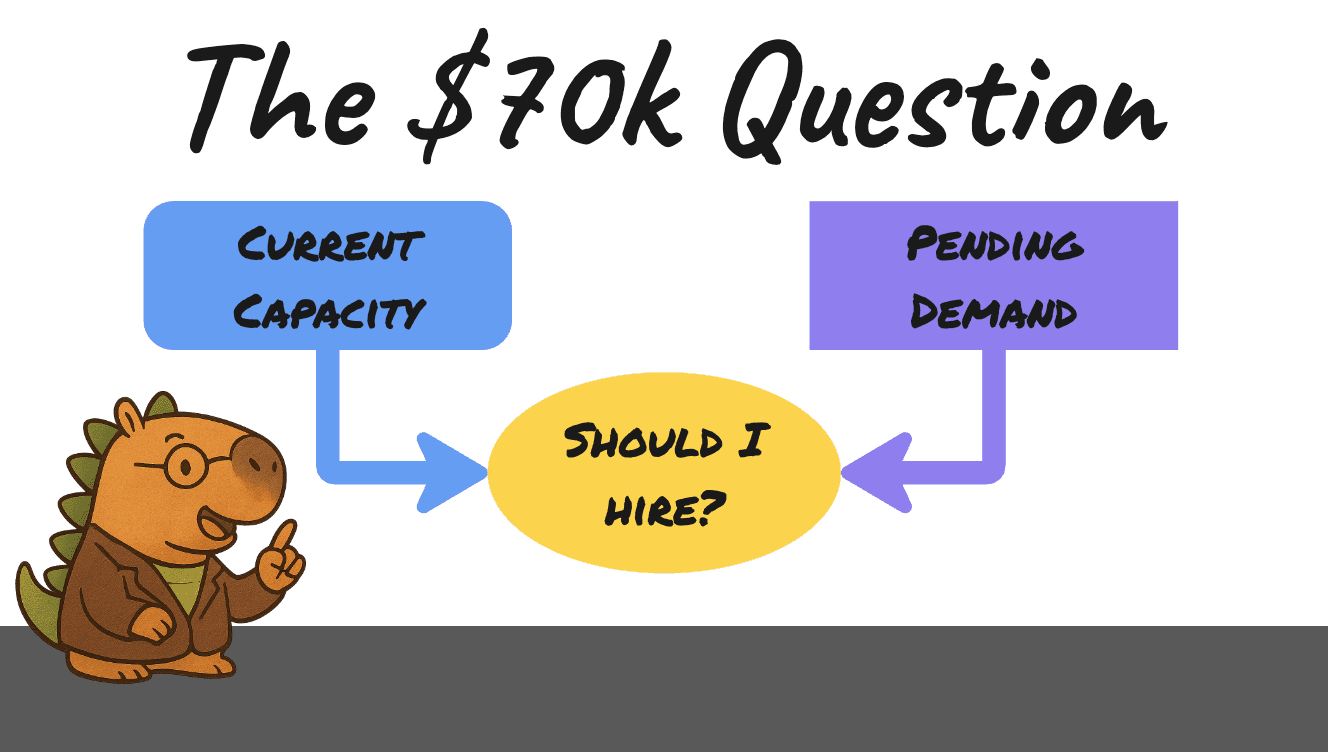
Hire too early and you burn $70K. Hire too late and you lose your best people. Here's how to use data to know when it's actually time.